 +1987 123456
 info@domain.com
 Rock Street, San Francisco
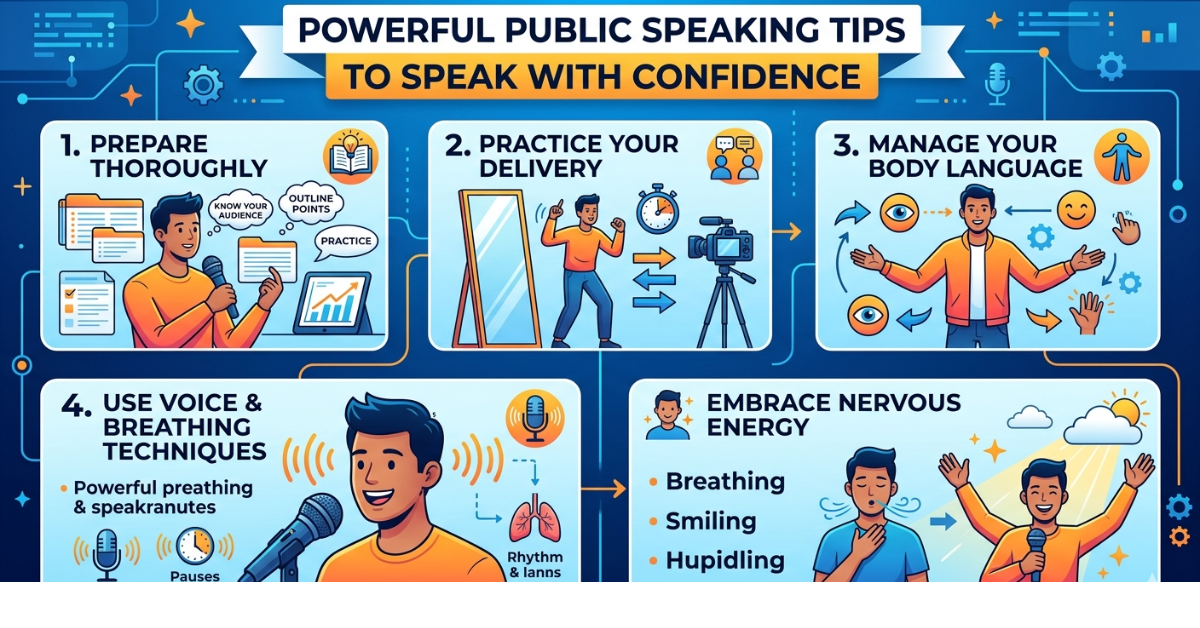
Standing in front of an audience can feel intimidating—even for experienced professionals. Whether you’re presenting in a meeting, delivering a speech at an event, or speaking in a classroom, mastering public speaking tips can dramatically improve your confidence and communication skills.
Public speaking isn’t just about talking; it’s about connecting with people, sharing ideas clearly, and leaving a lasting impression. The good news is that strong speaking skills aren’t something you’re born with—they’re something you develop with practice and the right strategies.
In this guide, you’ll discover practical and proven public speaking tips that will help you speak more confidently, engage your audience, and deliver memorable presentations.
Why Public Speaking Skills Matter
Before diving into the tips, it’s worth understanding why public speaking is such an important skill.
Strong public speaking skills can help you:
-
Advance your career
-
Communicate ideas clearly
-
Build leadership credibility
-
Inspire and influence others
-
Improve overall confidence
From business presentations to social events, effective communication can open many doors.
15 Practical Public Speaking Tips
1. Know Your Audience
One of the most important public speaking tips is understanding who you’re speaking to.
Ask yourself:
-
What does the audience already know?
-
What problems do they want solved?
-
Why should they care about your topic?
Tailoring your message makes your speech more relevant and engaging.
2. Start with a Strong Opening
The first 30 seconds of your speech matter the most. A strong opening immediately captures attention.
Consider starting with:
-
A surprising statistic
-
A short personal story
-
A thought-provoking question
-
A powerful quote
For example:
“Did you know that nearly 75% of people fear public speaking more than death?”
This kind of hook makes the audience curious about what comes next.
3. Structure Your Speech Clearly
A well-organized speech is easier for both you and your audience to follow.
Use a simple structure:
-
Introduction – Present your main idea
-
Body – Share 2–3 key points
-
Conclusion – Reinforce your message
Clear structure improves comprehension and keeps listeners engaged.
4. Practice, But Don’t Memorize
Practice is essential when applying public speaking tips, but memorizing every word can make your delivery sound robotic.
Instead:
-
Practice your main points
-
Use bullet notes
-
Rehearse out loud
-
Time your presentation
This approach keeps your speech natural and flexible.
5. Focus on Your Body Language
Nonverbal communication plays a huge role in public speaking.
Positive body language includes:
-
Standing upright
-
Maintaining eye contact
-
Using natural hand gestures
-
Avoiding crossed arms
Confident body language helps reinforce your message.
6. Control Your Speaking Pace
Many people speak too fast when nervous.
To improve clarity:
-
Pause between important points
-
Take deep breaths
-
Slow down your sentences
Pausing also gives your audience time to absorb information.
7. Use Stories and Examples
Facts inform people, but stories connect with them.
Adding storytelling to your speech:
-
Makes ideas easier to understand
-
Keeps the audience engaged
-
Creates emotional connection
Real-life examples make your message more relatable and memorable.
8. Use Visual Aids Wisely
Slides, charts, and visuals can strengthen your presentation when used correctly.
Best practices include:
-
Keep slides simple
-
Use large fonts
-
Avoid too much text
-
Highlight key data visually
Remember: slides should support your message—not replace it.
9. Manage Public Speaking Anxiety
Nervousness is normal—even experienced speakers feel it.
To manage anxiety:
-
Practice deep breathing
-
Visualize success
-
Prepare thoroughly
-
Focus on your message instead of yourself
The more you speak in public, the more comfortable it becomes.
10. Make Eye Contact
Eye contact builds trust and connection with your audience.
Instead of staring at notes or slides:
-
Look at different people around the room
-
Hold eye contact for a few seconds
-
Rotate your focus naturally
This makes your speech feel more personal.
11. Engage the Audience
The best speakers involve their audience.
Ways to increase engagement include:
-
Asking questions
-
Encouraging participation
-
Sharing relatable examples
-
Using humor when appropriate
An engaged audience remembers your message better.
12. Eliminate Filler Words
Filler words like “um,” “uh,” “like,” and “you know” weaken your delivery.
Instead:
-
Pause when thinking
-
Speak slowly
-
Practice regularly
Silence often sounds more confident than filler words.
13. Record and Evaluate Yourself
One of the most effective public speaking tips is self-review.
Record yourself practicing and check:
-
Tone and clarity
-
Body language
-
Speaking speed
-
Confidence level
This feedback helps you identify areas for improvement.
14. Adapt to the Audience’s Reaction
Great speakers adjust based on audience response.
Watch for signs such as:
-
Confusion
-
Engagement
-
Boredom
-
Interest
If people seem confused, clarify your point or give another example.
15. End with a Memorable Conclusion
Your conclusion should reinforce your main message and leave a lasting impression.
Strong closing strategies include:
-
Summarizing key points
-
Ending with a powerful quote
-
Sharing a call to action
-
Revisiting your opening story
A strong ending ensures your audience remembers your message.
Common Public Speaking Mistakes to Avoid
Even experienced speakers sometimes make mistakes. Avoid these common issues:
-
Reading directly from slides
-
Speaking too quickly
-
Overloading information
-
Ignoring audience interaction
-
Lack of preparation
Avoiding these mistakes can dramatically improve your presentation quality.
FAQs
What are the best public speaking tips for beginners?
Beginners should focus on preparation, practicing regularly, speaking slowly, and maintaining eye contact. Starting with small audiences also helps build confidence.
How can I overcome fear of public speaking?
To overcome fear, practice frequently, prepare thoroughly, visualize success, and focus on delivering value to your audience rather than worrying about mistakes.
How can I improve my public speaking skills quickly?
You can improve quickly by:
-
Practicing speeches regularly
-
Recording yourself speaking
-
Joining speaking groups like Toastmasters
-
Getting feedback from others
How long should a public speech be?
The ideal speech length depends on the context, but most effective presentations range from 10–20 minutes to maintain audience attention.
What makes a great public speaker?
Great public speakers combine:
-
Clear messaging
-
Strong storytelling
-
Confident body language
-
Audience engagement
-
Authentic delivery
These qualities help create impactful and memorable speeches.
Conclusion
Mastering public speaking tips doesn’t happen overnight, but with practice and the right techniques, anyone can become a confident and engaging speaker.
Start by understanding your audience, organizing your ideas clearly, practicing consistently, and focusing on connection rather than perfection. Over time, these small improvements add up to powerful communication skills.
If you want to continue improving, consider exploring resources on presentation skills, communication techniques, and leadership development.

Leave a Reply