 +1987 123456
 info@domain.com
 Rock Street, San Francisco
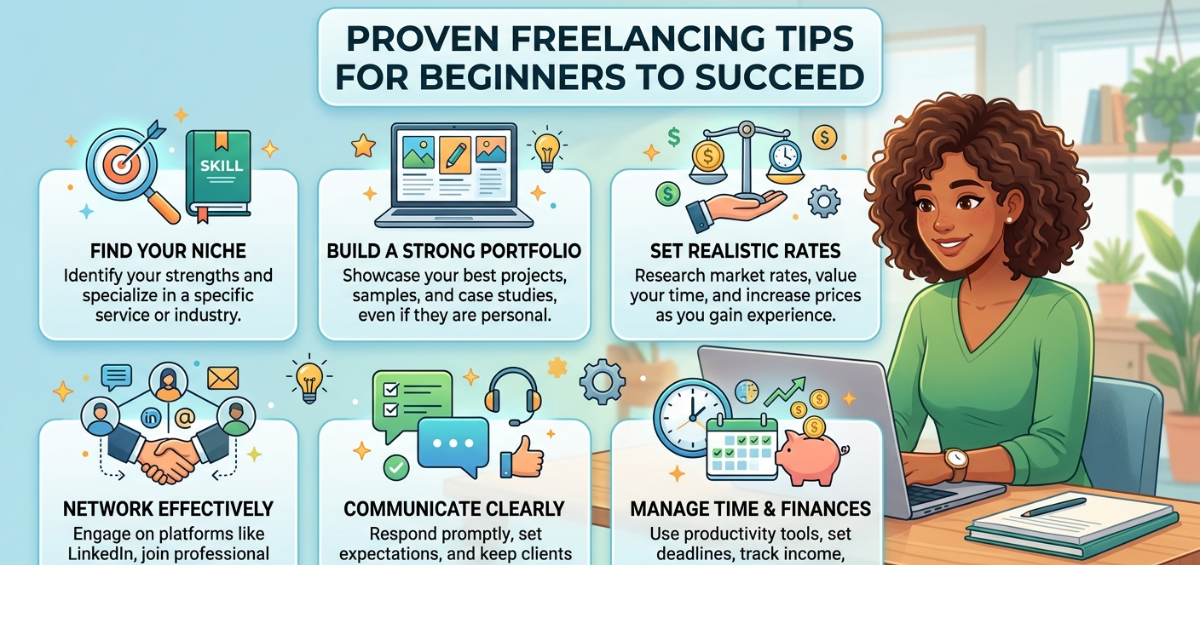
Starting a freelance career can feel exciting and overwhelming at the same time. One day you’re dreaming about working from anywhere, and the next you’re wondering how freelancers actually find clients. The truth is, freelancing can be incredibly rewarding—but only if you approach it with the right strategy.
These freelancing tips will help you build a strong foundation, attract clients, and grow a sustainable income. Whether you’re just starting out or struggling to gain momentum, these freelancing tips for beginners will guide you through the essential steps to succeed in today’s competitive freelance market.
Why Freelancing Is Growing Rapidly
Freelancing has exploded in popularity over the past decade. Businesses increasingly prefer hiring freelancers because it reduces costs and allows them to access global talent.
Some of the main benefits of freelancing include:
-
Flexible working hours
-
Ability to work from anywhere
-
Control over projects and clients
-
Potential for unlimited income growth
However, success in freelancing doesn’t happen overnight. That’s why learning the right freelancing tips for beginners is crucial.
Essential Freelancing Tips for Beginners
1. Choose a Clear Freelance Niche
One of the most important freelancing tips is to specialize instead of trying to do everything.
For example, instead of saying:
-
“I’m a writer”
Say:
-
“I’m a SaaS blog writer”
-
“I write SEO articles for automotive websites”
A niche helps you:
-
Stand out from competitors
-
Charge higher rates
-
Attract the right clients
Popular Freelance Niches
-
Content writing
-
Graphic design
-
Web development
-
SEO services
-
Social media management
-
Video editing
-
Virtual assistance
2. Build a Strong Portfolio
Clients want proof of your work before hiring you. A portfolio shows your skills and credibility.
Your portfolio should include:
-
3–6 high-quality samples
-
Client testimonials (if available)
-
Case studies showing results
If you’re a beginner, create sample projects to showcase your ability.
3. Start With Freelance Platforms
For beginners, freelance platforms can be a great starting point.
Popular websites include:
-
Upwork
-
Fiverr
-
Freelancer
-
PeoplePerHour
-
Toptal (for advanced professionals)
These platforms allow you to:
-
Build experience
-
Get your first reviews
-
Learn how clients hire freelancers
4. Learn How to Write Winning Proposals
Many beginners fail because they send generic proposals.
A good proposal should:
-
Address the client by name
-
Show you understand the project
-
Offer a clear solution
-
Include relevant samples
Example structure:
-
Short introduction
-
Understanding of the problem
-
Your solution
-
Portfolio samples
-
Friendly closing
5. Set Realistic Freelance Rates
Pricing can be confusing when starting out.
Common pricing models include:
-
Hourly rates
-
Project-based pricing
-
Retainer contracts
Beginner freelancers often start lower but increase rates as they gain experience.
Example Beginner Rates
| Service | Beginner Rate |
| Content Writing | $0.05–$0.10 per word |
| Graphic Design | $20–$50 per hour |
| Web Development | $25–$80 per hour |
| SEO Services | $30–$100 per hour |
Avoid underpricing for too long—it can attract low-quality clients.
6. Focus on Communication Skills
Strong communication is one of the most underrated freelancing tips for beginners.
Clients prefer freelancers who:
-
Respond quickly
-
Ask clear questions
-
Provide progress updates
Good communication builds trust and leads to long-term work.
7. Create Multiple Income Sources
Smart freelancers avoid relying on a single client.
Ways to diversify income:
-
Multiple clients
-
Retainer contracts
-
Digital products
-
Online courses
-
Affiliate marketing
This reduces financial risk if one client stops working with you.
8. Learn Basic Marketing
Freelancers who know marketing find clients faster.
Effective marketing channels include:
-
LinkedIn networking
-
Personal website
-
Twitter/X
-
Cold email outreach
-
Blogging
Consistent marketing helps build a strong personal brand.
9. Manage Your Time Like a Professional
Freelancers must manage their own schedules.
Helpful productivity techniques include:
-
Time blocking
-
Pomodoro technique
-
Task prioritization
Useful Productivity Tools
-
Trello
-
Notion
-
Asana
-
Clockify
-
Google Calendar
10. Always Deliver High-Quality Work
Your reputation is everything in freelancing.
Satisfied clients often:
-
Leave positive reviews
-
Recommend you to others
-
Offer repeat projects
Quality work leads to organic growth in your freelance career.
Advanced Freelancing Tips to Grow Faster
Once you gain experience, consider these advanced strategies.
Build a Personal Website
A professional website improves credibility and helps attract direct clients.
Include:
-
Portfolio
-
Services
-
Testimonials
-
Contact page
Develop Long-Term Client Relationships
Long-term clients provide consistent income and reduce the need for constant client hunting.
Continuously Upgrade Your Skills
Freelance markets evolve quickly. Learning new tools and skills keeps you competitive.
Examples:
-
AI tools
-
SEO strategies
-
Automation
-
Advanced design software
Common Freelancing Mistakes to Avoid
Many beginners make mistakes that slow their progress.
Avoid these common errors:
-
Charging extremely low rates
-
Missing deadlines
-
Ignoring contracts
-
Accepting every client
-
Not saving money for taxes
Learning from these mistakes early can save you a lot of stress.
FAQs About Freelancing Tips
What is the best freelancing tip for beginners?
The most important freelancing tip is choosing a niche and building a strong portfolio. Specialization makes it easier to attract clients and charge better rates.
How long does it take to succeed in freelancing?
Most freelancers start seeing steady income within 3–12 months, depending on skills, marketing efforts, and consistency.
Which freelance skill is most in demand?
High-demand freelance skills include:
-
SEO writing
-
Web development
-
Graphic design
-
Video editing
-
Digital marketing
How do beginners find their first freelance clients?
Beginners can find clients through:
-
Freelance platforms
-
LinkedIn networking
-
Cold emailing businesses
-
Social media marketing
-
Referrals
Can freelancing replace a full-time job?
Yes, many freelancers earn full-time or even higher incomes. However, it requires consistent effort, skill development, and strong client relationships.
Conclusion
Freelancing offers incredible freedom, but success requires strategy, patience, and consistent effort. By following these freelancing tips and applying the best freelancing tips for beginners, you can build a sustainable and profitable freelance career.
Focus on developing valuable skills, building a strong portfolio, and maintaining excellent client relationships. Over time, these habits will help you grow from a beginner freelancer into a trusted professional.
If you’re serious about freelancing, start implementing these tips today—your future freelance business depends on it.

Leave a Reply