 +1987 123456
 info@domain.com
 Rock Street, San Francisco

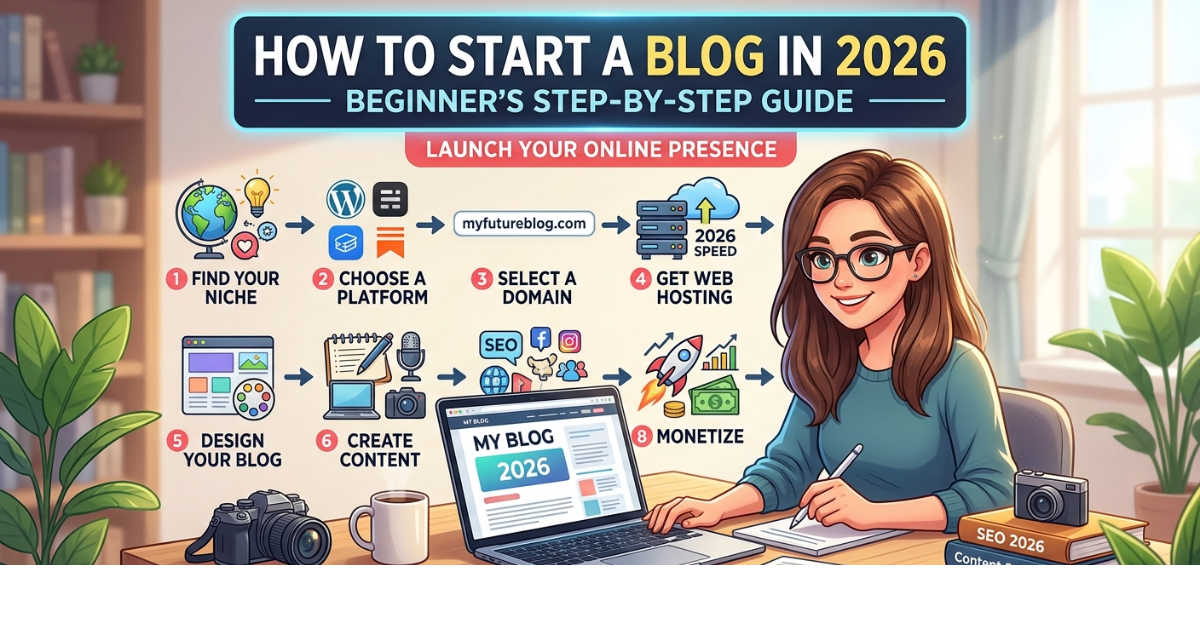
Starting a blog might seem complicated at first, but the truth is anyone can do it with the right guidance. If you’ve ever wondered how to start a blog, you’re not alone. Millions of people start blogs every year to share their ideas, build an online presence, or even earn money online.
The good news? You don’t need to be a tech expert or professional writer to get started. In this guide, you’ll learn how to start a blog from scratch, choose the right platform, create engaging content, and grow your audience step by step.
Why Start a Blog?
Before learning how to start a blog, it helps to understand why blogging has become so popular.
People start blogs for many reasons, including:
-
Sharing knowledge or expertise
-
Building a personal brand
-
Starting an online business
-
Making money through ads and affiliate marketing
-
Connecting with a community of like-minded readers
According to multiple digital marketing reports, businesses that blog generate significantly more website traffic and leads than those that don’t.
Step-by-Step Guide on How to Start a Blog
1. Choose Your Blog Niche
Your blog niche is the main topic you’ll write about. Choosing the right niche helps attract a targeted audience and makes it easier to grow.
Popular blog niches include:
-
Personal finance
-
Technology
-
Health and fitness
-
Food and recipes
-
Travel
-
Digital marketing
-
Lifestyle
Tips for choosing a niche
-
Pick something you genuinely enjoy
-
Make sure people search for the topic
-
Look for monetization opportunities
-
Avoid extremely broad niches
For example, instead of “fitness,” you could focus on home workouts for beginners.
2. Pick a Blogging Platform
The next step in learning how to start a blog is selecting the right blogging platform.
Popular blogging platforms
| Platform | Best For | Pros | Cons |
| WordPress.org | Professional bloggers | Full control, SEO-friendly | Requires hosting |
| Wix | Beginners | Easy drag-and-drop builder | Limited customization |
| Blogger | Hobby blogs | Free | Fewer features |
| Squarespace | Creators & portfolios | Beautiful templates | Higher cost |
Most professional bloggers choose WordPress.org because it offers complete control, flexibility, and strong SEO capabilities.
3. Choose a Domain Name
Your domain name is your blog’s web address (example: yourblog.com).
Tips for selecting a domain name
-
Keep it short and memorable
-
Avoid numbers and hyphens
-
Use keywords if possible
-
Choose a .com extension when available
Example:
If your blog is about cooking, a name like QuickHomeRecipes.com works better than something vague.
4. Get Web Hosting
To make your blog live on the internet, you need web hosting.
Web hosting stores your website files and makes them accessible to visitors.
Popular hosting providers
-
Bluehost
-
SiteGround
-
Hostinger
-
DreamHost
Many hosting providers also offer one-click WordPress installation, which makes starting a blog extremely easy.
5. Install WordPress and Set Up Your Blog
Once you purchase hosting, installing WordPress usually takes just a few minutes.
After installation, you can:
-
Choose a blog theme
-
Customize your layout
-
Add essential plugins
-
Create your first pages
Important pages every blog should have
-
About Page
-
Contact Page
-
Privacy Policy
-
Disclaimer
These pages improve credibility and are important for SEO and legal compliance.
6. Design Your Blog
Your blog design plays a major role in user experience.
Focus on:
-
Clean layout
-
Mobile responsiveness
-
Easy navigation
-
Fast loading speed
Recommended WordPress themes
-
Astra
-
GeneratePress
-
Kadence
-
OceanWP
A simple design often performs better than complicated layouts.
7. Write Your First Blog Post
Now comes the most exciting part of how to start a blog—creating content.
Tips for writing your first post
-
Solve a specific problem
-
Use clear headings and structure
-
Add images or graphics
-
Keep paragraphs short
Example blog post ideas:
-
“10 Easy Recipes for Beginners”
-
“Best Budget Travel Tips”
-
“How to Start Investing with $100”
High-quality content helps build trust and keeps readers coming back.
8. Learn Basic SEO for Blogging
If you want people to find your blog on Google, you need Search Engine Optimization (SEO).
Basic blogging SEO tips
-
Use your target keyword naturally
-
Write compelling meta descriptions
-
Optimize headings (H1, H2, H3)
-
Add internal links
-
Use alt text for images
-
Improve page speed
Helpful SEO tools
-
Google Keyword Planner
-
Ahrefs
-
SEMrush
-
Ubersuggest
SEO helps your blog appear in search results and attract organic traffic.
9. Promote Your Blog
Publishing content is only half the job. Promoting your blog is equally important.
Ways to promote your blog
-
Share posts on social media
-
Join blogging communities
-
Use Pinterest for traffic
-
Build an email list
-
Write guest posts
-
Participate in forums like Reddit or Quora
Consistent promotion helps grow your audience faster.
10. Monetize Your Blog
Once your blog starts getting traffic, you can turn it into a source of income.
Common blog monetization methods
-
Display advertising Google AdSense
-
Affiliate marketing
-
Sponsored posts
-
Selling digital products
-
Offering online courses
-
Freelance services
Many successful bloggers earn thousands of dollars per month through these methods.
Common Blogging Mistakes to Avoid
When learning how to start a blog, beginners often make these mistakes:
-
Choosing a niche with no audience
-
Publishing low-quality content
-
Ignoring SEO
-
Giving up too early
-
Not promoting blog posts
Blogging success takes consistency and patience.
FAQs About How to Start a Blog
1. How much does it cost to start a blog?
Starting a blog typically costs $50 to $150 per year, depending on your hosting provider, domain name, and theme.
2. Can I start a blog for free?
Yes, platforms like Blogger or WordPress.com allow free blogging. However, self-hosted WordPress offers more control and monetization options.
3. How long does it take to make money blogging?
Most bloggers take 6–12 months to start earning money, depending on content quality, SEO, and promotion strategies.
4. Do I need technical skills to start a blog?
No. Modern blogging platforms make it easy for beginners to launch a blog without coding knowledge.
5. How often should I publish blog posts?
A good starting point is 1–2 blog posts per week. Consistency is more important than frequency.
Conclusion
Learning how to start a blog doesn’t have to be overwhelming. By choosing the right niche, selecting a reliable blogging platform, creating valuable content, and applying basic SEO strategies, you can build a successful blog from scratch.
The most important step is simply getting started. Your first blog post doesn’t have to be perfect—it just needs to be published.
With patience, consistency, and continuous learning, your blog can grow into a powerful platform for sharing ideas, building an audience, and even generating income.

Leave a Reply