 +1987 123456
 info@domain.com
 Rock Street, San Francisco

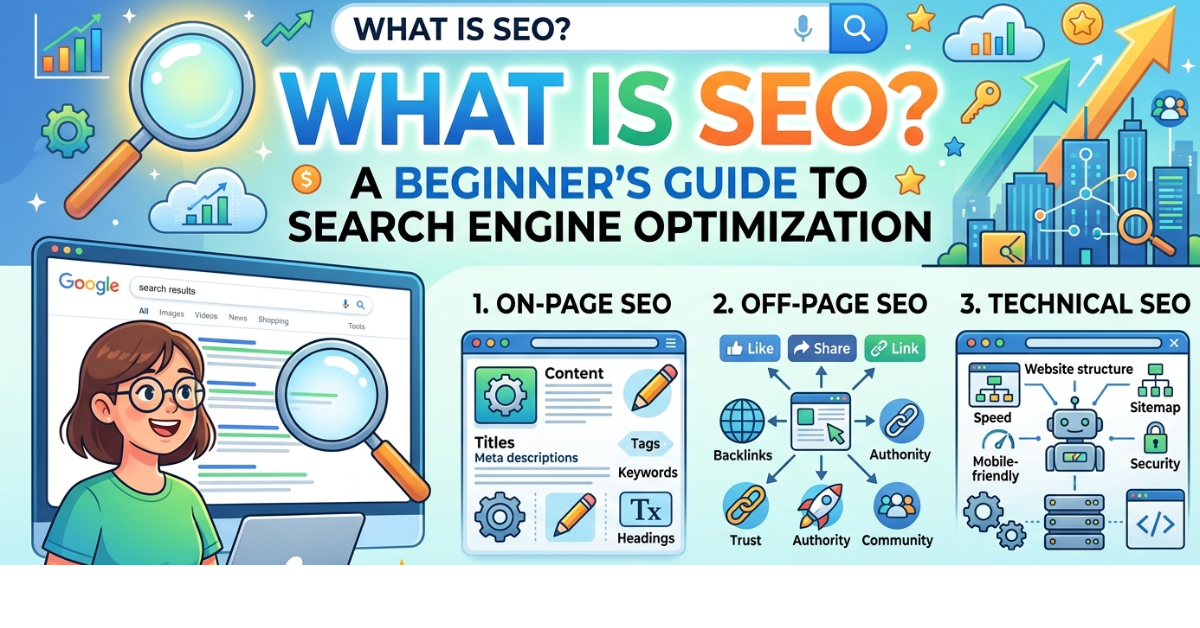
Imagine creating a great website or blog, but no one ever finds it. That’s where SEO (Search Engine Optimization) comes in. If you’ve ever searched something on Google and clicked one of the top results, you’ve already experienced the power of SEO.
So, what is SEO? In simple terms, SEO is the process of optimizing a website so that it appears higher in search engine results like Google, Bing, or Yahoo. The higher your website ranks, the more people can find it, which often leads to more traffic, customers, and opportunities.
In this guide, we’ll break down what SEO is, how it works, why it matters, and the key strategies used to improve search rankings.
What Is SEO?
SEO Search Engine Optimization is the practice of improving a website’s visibility in search engine results pages (SERPs). The goal is to attract organic (non-paid) traffic by making your website more relevant and trustworthy in the eyes of search engines.
Search engines use complex algorithms to decide which pages appear first. They helps ensure your website meets those ranking criteria.
In simple terms:
SEO helps search engines understand your website and helps users find your content easily.
Why SEO Is Important
They plays a critical role in digital marketing because most online experiences start with a search engine.
Key benefits of SEO include:
-
Higher website traffic
-
Better visibility in search results
-
Increased credibility and trust
-
More leads and conversions
-
Long-term marketing results
According to industry research, over 90% of online experiences begin with a search engine, making SEO essential for businesses, bloggers, and content creators.
How Search Engines Work
Before understanding strategies, it helps to know how search engines operate.
Search engines follow three main steps:
1. Crawling
Search engines send bots (called spiders or crawlers) to discover new and updated web pages.
2. Indexing
After crawling, the search engine stores and organizes the content in a massive database called the index.
3. Ranking
When someone searches for something, the search engine ranks pages based on relevance, quality, and authority.
Types of SEO
There is usually divided into three main categories.
1. On-Page SEO
On-page focuses on optimizing elements within your website.
Examples include:
-
Using relevant keywords
-
Optimizing title tags and meta descriptions
-
Writing high-quality content
-
Improving internal linking
-
Optimizing images
For example, if your article targets the keyword “what is SEO,” it should appear naturally in the title, headings, and content.
2. Off-Page SEO
Off-page refers to actions outside your website that influence rankings.
Key off-page factors include:
-
Backlinks from other websites
-
Social media signals
-
Brand mentions
-
Online reputation
Search engines see backlinks as votes of confidence, meaning the more quality sites link to you, the more trustworthy your site appears.
3. Technical SEO
Technical focuses on improving the technical aspects of your website to help search engines crawl and index it efficiently.
Important technical factors:
-
Website speed
-
Mobile friendliness
-
Secure HTTPS connection
-
XML sitemaps
-
Structured data
A technically optimized website ensures both users and search engines have a smooth experience.
Key Elements of Successful SEO
To succeed with this, several important components must work together.
1. Keyword Research
Keyword research helps identify the words and phrases people type into search engines.
Examples of related keywords (LSI keywords):
-
search engine optimization
-
SEO meaning
-
how they works
-
SEO for beginners
-
organic search traffic
Tools often used for keyword research include:
-
Google Keyword Planner
-
Ahrefs
-
SEMrush
-
Ubersuggest
2. High-Quality Content
Content is the backbone of SEO. Search engines prioritize helpful, relevant, and original content.
Good content should:
-
Answer user questions
-
Provide accurate information
-
Be easy to read
-
Include relevant keywords naturally
3. User Experience UX
Search engines pay attention to how users interact with websites.
Important UX factors include:
-
Fast loading speed
-
Mobile optimization
-
Clear navigation
-
Low bounce rate
-
Engaging design
A positive user experience often leads to better rankings and longer visits.
4. Backlinks
Backlinks are links from other websites pointing to your site. They remain one of the strongest ranking factors in this.
High-quality backlinks from authoritative sites signal that your content is valuable.
Common SEO Mistakes to Avoid
Even experienced website owners sometimes make their mistakes.
Some common ones include:
-
Keyword stuffing
-
Duplicate content
-
Ignoring mobile optimization
-
Slow website speed
-
Poor internal linking
Avoiding these mistakes can significantly improve your search performance.
How Long Does Take?
There is a long-term strategy, not an overnight solution.
Typically, it can take 3 to 6 months to start seeing noticeable improvements in rankings and traffic. However, the results tend to be long-lasting compared to paid advertising.
The Future of SEO
They continues to evolve as search engines become smarter.
Some major trends shaping include:
-
AI-powered search engines
-
Voice search optimization
-
Mobile-first indexing
-
User intent-focused content
Websites that focus on quality content and user value will always perform better in the long run.
FAQs
What is SEO in simple terms?
Thier is the process of optimizing a website so it ranks higher in search engine results and attracts more organic traffic.
Why is SEO important for websites?
They increases visibility, drives organic traffic, builds credibility, and helps websites reach their target audience.
Is free or paid?
They mainly focuses on organic traffic, meaning you don’t pay for clicks like you do with paid ads. However, tools and services may have costs.
Can beginners learn?
Yes. With basic knowledge of keywords, content optimization, and website structure, beginners can start implementing their strategies.
What is the difference between SEO and SEM?
They focuses on organic traffic, while SEM (Search Engine Marketing) includes paid advertising such as Google Ads.
Conclusion
So, what is SEO? It’s the process of optimizing your website so that search engines can understand your content and rank it higher in search results. When done correctly, SEO can bring consistent, long-term traffic and growth.
The key to successful SEO is creating valuable content, using the right keywords, improving user experience, and building strong backlinks. While it takes time, the long-term benefits make SEO one of the most powerful digital marketing strategies available.

Leave a Reply