 +1987 123456
 info@domain.com
 Rock Street, San Francisco

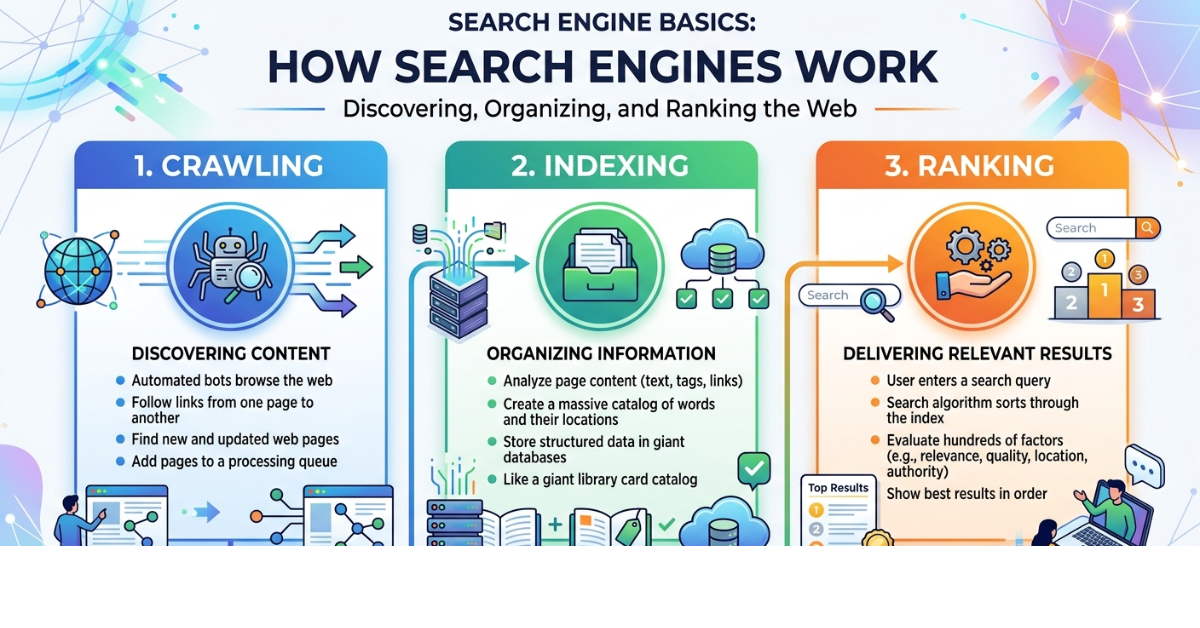
Ever wondered how Google seems to instantly find the exact page you’re looking for? Whether you’re searching for a recipe, a product, or a quick answer to a question, search engines deliver results in milliseconds. Understanding search engine basics helps you see how this process works behind the scenes.
At their core, search engines are powerful systems designed to discover, organize, and rank billions of webpages. By learning the fundamentals—like crawling, indexing, and ranking—you’ll gain a clearer picture of how websites appear in search results and how search engine optimization (SEO) helps improve visibility online.
This guide breaks down the search engine basics in simple, practical terms so beginners can understand how search engines work and why they matter.
What Is a Search Engine?
A search engine is an online tool that helps users find information on the internet. It scans billions of webpages and delivers the most relevant results for a specific search query.
Popular search engines include:
-
Google largest and most widely used
-
Bing
-
Yahoo
-
DuckDuckGo
-
Baidu popular in China
These platforms rely on complex algorithms to determine which pages best match a user’s search intent.
How Search Engines Work
To understand search engine basics, you need to know the three main processes search engines use.
1. Crawling
Crawling is the process where search engines discover new and updated webpages.
Search engines use automated programs called web crawlers or spiders. These bots travel across the internet by following links from one page to another.
During crawling, search engines look for:
-
New webpages
-
Updated content
-
Broken links
-
Site structure
Example:
When you publish a new blog post, a search engine crawler eventually visits your site and discovers the new page.
2. Indexing
Once a page is crawled, the search engine analyzes its content and stores it in a massive database called the search index.
The indexing process involves analyzing:
-
Keywords
-
Page content
-
Images
-
Titles and headings
-
Internal links
-
Metadata
Think of indexing like a giant digital library catalog. When someone searches for information, the search engine quickly looks through this index to find the most relevant pages.
3. Ranking
Ranking is where the real competition happens.
When a user enters a search query, the search engine’s algorithm evaluates all indexed pages and ranks them based on relevance and quality.
Some major ranking factors include:
-
Content relevance
-
Keyword usage
-
Page quality
-
Website authority
-
User experience
-
Page speed
-
Mobile friendliness
The goal is simple: show the most helpful results first.
Why Search Engines Matter
Search engines play a crucial role in how people discover information online. In fact, billions of searches happen every day.
For businesses, bloggers, and website owners, search engines are important because they:
-
Drive organic website traffic
-
Help users discover new brands
-
Provide visibility without paid ads
-
Connect people with relevant information
That’s why learning search engine basics is the first step toward mastering SEO.
Key Components of a Search Engine Results Page SERP
When you search for something, you land on a Search Engine Results Page (SERP).
A typical SERP contains several elements:
Organic Results
These are unpaid listings ranked based on SEO and relevance.
Paid Ads
Businesses can pay to appear at the top of search results through platforms like Google Ads.
Featured Snippets
These are highlighted answers displayed above the regular results.
Knowledge Panels
Information boxes that show quick facts about people, places, or organizations.
Image and Video Results
Sometimes search engines show visual content related to the query.
Understanding SERPs is an important part of search engine basics because it shows how search engines present information.
What Is Search Engine Optimization SEO?
Search Engine Optimization SEO is the process of improving a website so it ranks higher in search engine results.
SEO involves several strategies, including:
-
Keyword research
-
Creating high-quality content
-
Improving website speed
-
Building backlinks
-
Optimizing page structure
The better your SEO, the more likely your site will appear on the first page of search results.
Important SEO Elements for Beginners
If you’re learning search engine basics, focus on these foundational SEO elements.
1. Keywords
Keywords are the words or phrases people type into search engines.
Example:
If someone searches “search engine basics”, Google looks for pages that match that topic.
Tips for keyword usage:
-
Include keywords naturally in titles
-
Use them in headings
-
Add them to meta descriptions
-
Avoid keyword stuffing
2. High-Quality Content
Search engines prioritize content that is helpful and informative.
Good content should:
-
Answer user questions
-
Be easy to read
-
Provide accurate information
-
Offer real value
3. Backlinks
Backlinks are links from other websites pointing to your page.
Search engines view backlinks as a signal of trust and authority.
For example, if a reputable website links to your article, search engines assume your content is credible.
4. User Experience
Search engines consider how users interact with your website.
Important factors include:
-
Page load speed
-
Mobile-friendly design
-
Easy navigation
-
Low bounce rate
Common Search Engine Terms You Should Know
Here are some important terms often mentioned when discussing search engine basics:
| Term | Meaning |
| Algorithm | A system used by search engines to rank pages |
| Crawling | Discovering pages across the web |
| Indexing | Storing webpage information in a database |
| Ranking | Ordering pages in search results |
| SERP | Search Engine Results Page |
| Backlinks | Links from other sites pointing to yours |
Tips to Improve Search Visibility
If you want your website to perform better in search engines, start with these beginner-friendly tips:
-
Write content that answers real questions.
-
Use relevant keywords naturally.
-
Optimize page titles and headings.
-
Improve website speed.
-
Build backlinks from reputable sites.
-
Keep content updated regularly.
Small improvements in these areas can make a big difference in search rankings.
FAQs About Search Engine Basics
What are search engine basics?
Search engine basics refer to the fundamental processes search engines use to discover, analyze, and rank webpages. These include crawling, indexing, and ranking.
How do search engines find websites?
Search engines find websites using automated bots called web crawlers that follow links across the internet and scan webpages.
What is the most popular search engine?
Google is the most widely used search engine worldwide, handling over 90% of global search traffic.
Why is SEO important?
SEO helps websites appear higher in search results, increasing visibility, traffic, and potential customers.
How long does SEO take to work?
SEO is a long-term strategy. It can take several weeks to several months to see noticeable improvements in rankings.

Leave a Reply